
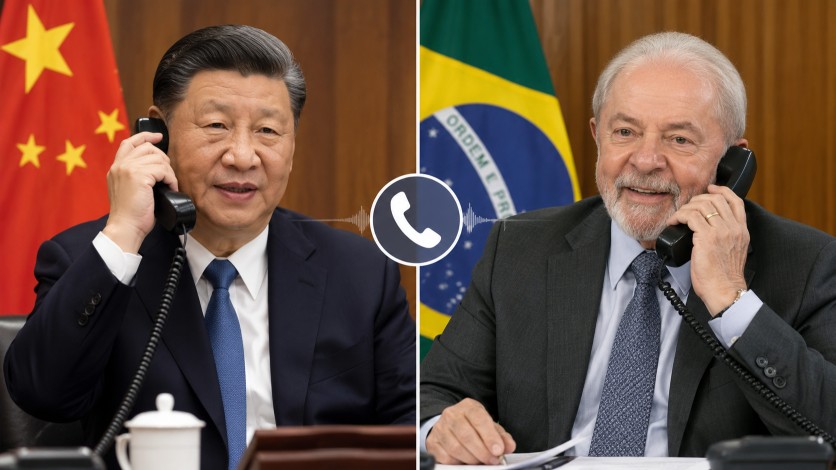
In a recent phone call, Chinese President Xi Jinping and Brazilian President Luiz Inácio Lula da Silva reaffirmed their dedication to enhancing bilateral relations and strengthening their collaboration on both regional and global matters. Xi expressed China’s readiness to elevate strategic cooperation with Brazil, emphasizing the potential for growth across various sectors such as trade, investment, infrastructure, green development, and technology. This conversation underscores the importance both nations place on fostering stability in global governance.
Xi and Lula engaged in discussions aimed at boosting their coordination on international platforms, with a mutual intent to fortify alliances among developing nations. Both leaders reiterated their commitment to multilateralism and sustainable development, emphasizing the significance of closer economic partnerships. Their dialogue reflects a shared vision for a more interconnected and cooperative international community, highlighting their role in promoting these ideals on the world stage.
Through this conversation, the two presidents underscored the comprehensive strategic partnership evolving between China and Brazil. They pledged to maintain high-level exchanges, aiming to deepen cooperation that promises mutual benefits and development. The dialogue marks a continuation of efforts to solidify ties between the two countries, which hold considerable influence in their respective regions and beyond.
The leaders’ commitment to expanding collaboration in key areas not only aims to enhance their bilateral ties but also seeks to contribute positively to global economic stability and development. By focusing on sectors like green development and technology, they are setting a precedent for sustainable progress that could have far-reaching effects on the global stage.
This conversation is part of broader efforts by both China and Brazil to navigate the complexities of regional and global politics with a cooperative approach. Their focus on strengthening partnerships among developing countries further emphasizes their dedication to a multilateral world order, where diverse voices and interests can be represented and advanced effectively.