
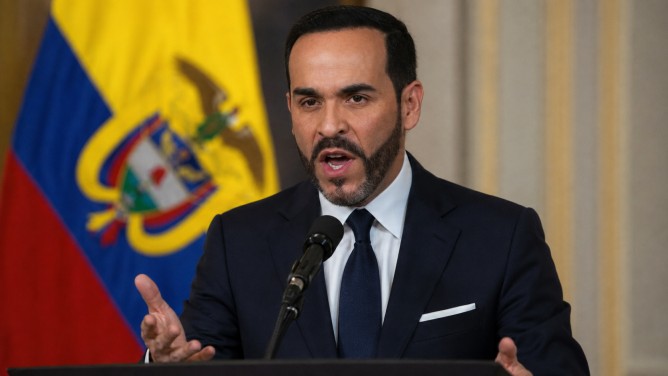
In a significant policy shift, Colombian President Abelardo de la Espriella has directed law enforcement and migration authorities to initiate operations against migrants who lack regular immigration status and foreign nationals suspected of criminal activities. This directive was announced during a cabinet meeting held in Barranquilla, where the president emphasized that the focus would initially be on migrants engaged in criminal acts, followed by those who have not regularized their residency.
President de la Espriella also declared an intensified crackdown on criminal organizations involved in drug trafficking, illegal mining, extortion, and smuggling. He made it clear that his administration intends to classify and combat these groups in the same manner as terrorists, signaling a hardline stance on national security issues.
The president’s newly announced immigration measures have sparked criticism from opposition figures and human rights advocates. These critics argue that the policy could potentially reverse Colombia’s historically supportive approach toward migrants, especially those arriving from Venezuela. The situation of Venezuelans in Colombia is particularly precarious, with a significant portion reportedly residing in the country without proper documentation.
Critics are urging the government to prioritize the process of regularizing the status of migrants rather than implementing broad deportation initiatives. They argue that a focus on documentation and integration could lead to more positive outcomes than the proposed enforcement measures, which they fear could lead to human rights violations.
The president’s remarks have also ignited discussions about the terminology and legal frameworks used to describe migration issues. Colombian laws typically describe migrants without proper documentation as being in an “irregular” situation, avoiding the term “illegal,” which carries different legal and social implications.