
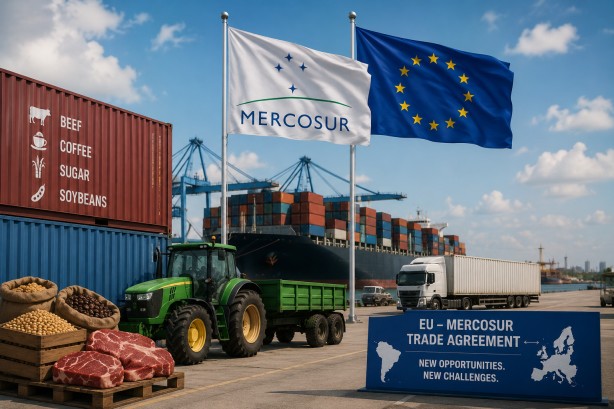
The recent activation of the trade agreement between the European Union and Mercosur is stirring concerns among producers in Brazil, Argentina, Uruguay, and Paraguay. This deal, while offering Mercosur countries improved entry into European markets, simultaneously exposes their domestic markets to a surge of European goods. Industries that have historically thrived under protectionist policies are now bracing for the impact of intensified competition.
Among the most apprehensive are producers of wine, cheese, honey, and chocolate. Premium cheese makers, in particular, are feeling the heat from well-established European brands. The new regulations also impose restrictions on the use of certain geographical names associated with European products for goods produced outside Europe. However, some current users might still receive protective measures.
Proponents of the agreement highlight its potential broader advantages, suggesting that the increase in trade and investment could bolster Mercosur’s standing in the global economy. They believe it could foster enhanced cooperation among Mercosur nations. Additionally, the agreement might serve as a stepping stone for Mercosur to establish further trade partnerships with countries like Canada, Japan, and the United Arab Emirates.
On the flip side, critics caution that the deal might deepen the region’s reliance on exporting raw materials, disproportionately benefiting larger agricultural and industrial enterprises over smaller producers. This scenario raises concerns about the resilience of smaller businesses, which now face the challenge of enhancing their competitiveness and adapting to a new trading landscape as European imports become more prevalent in South American markets.