
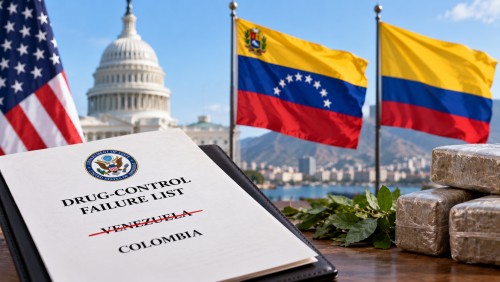
Amid ongoing efforts to combat drug trafficking in Latin America, the United States has announced a notable change in its assessment of Venezuela’s counternarcotics performance. The US government has removed Venezuela from its list of countries that have failed to meet international commitments in the fight against drug trafficking. This decision highlights a perceived improvement in Venezuela’s efforts under interim President Delcy Rodríguez.
Previously, Venezuela was listed among countries that Washington classified as not fulfilling their obligations in the global fight against narcotics. The latest move signals a shift in relations as the US acknowledges progress made by Venezuelan authorities in targeting drug-trafficking organizations.
While Venezuela sees a positive update, the situation remains unchanged for Colombia. The country continues to be on the US list of nations designated as failing demonstrably to meet international counternarcotics obligations over the past year. The White House has indicated, however, that Colombia’s status could be reevaluated if further progress is made against coca cultivation, cocaine production, and drug-trafficking networks.
Colombian officials have expressed their commitment to addressing the entire spectrum of the drug trade, including illicit crops, production facilities, trafficking routes, and criminal finances, all while dismantling international networks. This approach forms part of Colombia’s broader strategy to tackle the challenges posed by drug trafficking within its borders.
The US decision reflects a broader focus on enhancing counternarcotics cooperation with Latin American countries. Both Venezuela and Colombia continue to be identified as major drug-transit or illicit drug-producing countries for fiscal year 2027. However, with Venezuela no longer classified as failing in its obligations, there is a potential for shifting dynamics in regional counternarcotics efforts.