
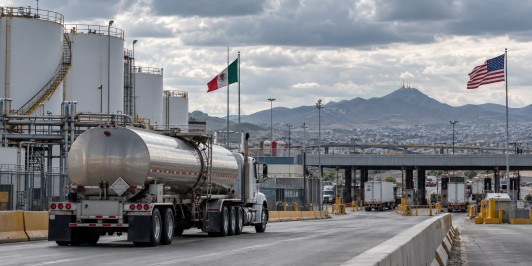
Amid rising energy prices and geopolitical tensions affecting global fuel markets, Mexico faces potential challenges in maintaining its diesel supply. The situation has been exacerbated by U.S. President Donald Trump’s support for a proposal to restrict or ban diesel exports from the United States, a country that provides a significant portion of Mexico’s diesel imports.
Mexico relies heavily on diesel from its northern neighbor, with over 40% of its diesel demand being met by U.S. imports. In June 2026, the country imported an average of about 288,000 barrels of U.S. diesel per day, according to U.S. energy data. Any disruption in this supply could compel Mexico to seek alternative markets further afield, raising transportation costs and potentially impacting fuel prices, inflation, and critical sectors like transportation, agriculture, and mining.
Mexican President Claudia Sheinbaum has sought to reassure the public, asserting that the nation’s domestic production is sufficient to manage the situation. She pointed to the country’s refinery network, including the Dos Bocas refinery in Tabasco, as a key component in the government’s strategy to sustain diesel supply. Additionally, Mexico has implemented fuel subsidies and a voluntary price agreement with retailers to help stabilize prices domestically.
Experts in the energy sector have advised that Mexico should prepare for possible interruptions by diversifying its diesel import sources, boosting domestic refining capabilities, and enhancing fuel storage infrastructure. These measures could mitigate the impact of U.S. policy changes and global supply uncertainties.
As the international energy landscape remains volatile due to ongoing conflicts in the Middle East and Ukraine, Mexico’s efforts to reduce its reliance on U.S. diesel imports are crucial for maintaining economic stability and ensuring that key industries continue to function smoothly.