
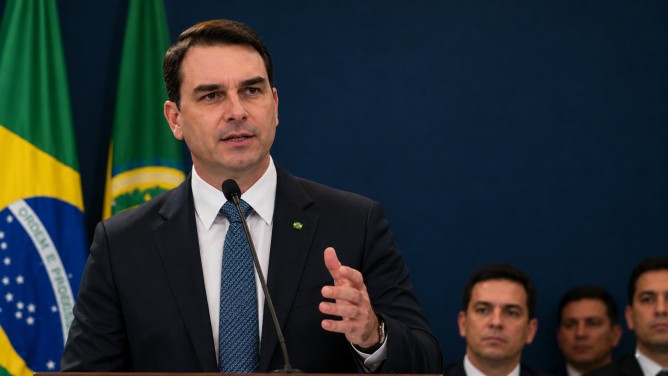
As Brazil gears up for its presidential election in October, Flavio Bolsonaro has emerged as the Liberal Party’s candidate, stepping into the political spotlight following an endorsement from his father, former President Jair Bolsonaro. The younger Bolsonaro has laid out a platform focused on addressing crime, curbing inflation, and reducing high taxes, presenting himself as a viable alternative to the incumbent President Luiz Inácio Lula da Silva, who is campaigning for another term.
Despite his ambitions, Flavio Bolsonaro’s campaign is navigating a landscape fraught with challenges. He has been thrust into controversies, including scrutiny over his connections to a businessman currently under investigation. Additionally, a public spat involving his family, particularly with former First Lady Michelle Bolsonaro, and the impact of new U.S. tariffs on Brazil, add layers of complexity to his political journey. Opinion polls suggest a tight race, with Lula maintaining a slight edge ahead of a possible runoff.
The electoral contest is playing out against a backdrop of heightened political division and economic concerns. Trade tensions with the United States have become a significant talking point, as Brazil grapples with the implications of these developments on its economic landscape. As the October election draws nearer, Flavio Bolsonaro is urging conservative factions to rally together to bolster his campaign efforts.
In this highly charged atmosphere, Flavio Bolsonaro’s call for unity among conservatives highlights a strategic move to consolidate support and navigate the challenges posed by the political and economic environment. His campaign’s success hinges on effectively addressing the controversies and the economic issues that weigh heavily on the minds of Brazilian voters. The outcome of this election will not only determine Brazil’s leadership but also its approach to navigating domestic and international challenges.