
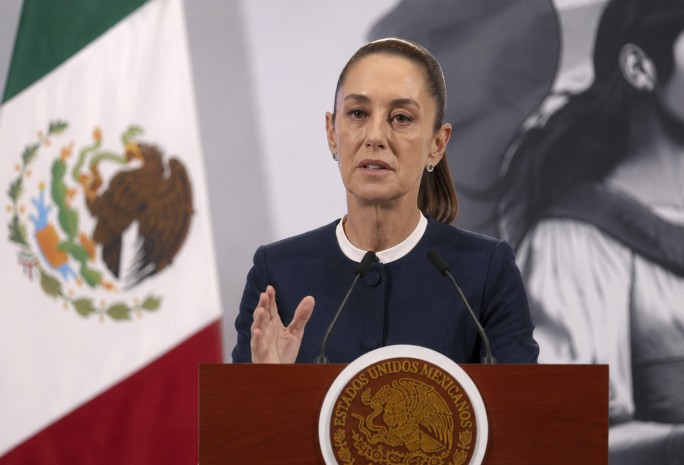
In response to a recent decision by the United States to implement a 10% tariff on Mexican exports not covered by the United States-Mexico-Canada Agreement (USMCA), Mexican President Claudia Sheinbaum has emphasized her government’s commitment to ensuring long-term trade stability. Sheinbaum characterized the tariff imposition as a unilateral action by the U.S. and underscored Mexico’s aim to prevent similar unexpected tariffs in the future. Her administration is focused on maintaining favorable trade conditions that offer advantages over other nations.
Sheinbaum acknowledged the complexities in negotiating with the U.S., pointing out the challenges posed by President Donald Trump’s protectionist trade policies. Mexico currently contends with specific tariffs on various sectors, including automobiles, steel, aluminum, and other raw materials. To address these issues, Sheinbaum’s administration is actively pursuing a comprehensive agreement that would provide a stable environment for investors and bolster Mexico’s trade standing.
The ongoing discussions occur in the backdrop of an evaluation of the USMCA trade agreement between the United States and Mexico. U.S. officials are advocating for tighter regional content requirements in pivotal industries, aiming to assert more stringent rules. In contrast, Mexico is promoting a vision of regional integration that would not only benefit both nations’ economies but also sustain the robust trade connections between them.
As these negotiations unfold, Mexico is particularly focused on securing a more predictable trade environment. Sheinbaum’s administration seeks to fortify the nation’s trade infrastructure by negotiating terms that would enhance investor confidence and promote economic growth. The overarching goal is to arrive at a mutual understanding that safeguards Mexico’s trade interests while accommodating the evolving demands of the U.S. trade agenda.
Throughout these talks, the Mexican government remains dedicated to fostering a strong bilateral relationship with the United States, built on mutual economic interests and a shared commitment to regional prosperity. As the situation develops, Mexico aims to navigate the complexities of international trade with a strategic approach that aligns with its long-term economic objectives.