
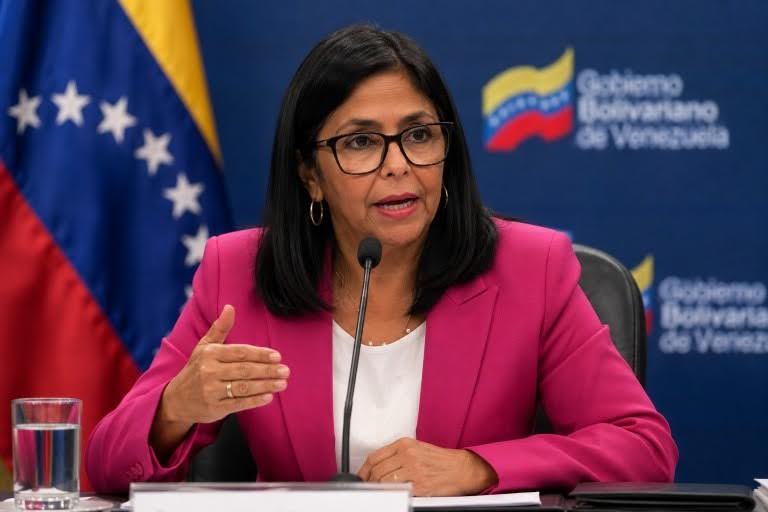
Amidst intense domestic criticism, Venezuela’s interim president, Delcy Rodríguez, has stood by a contentious energy agreement with the United States, assuring that the nation maintains control and sovereignty over its oil reserves. Rodríguez, who assumed leadership earlier this year following the removal of Maduro in a U.S.-orchestrated operation, addressed Venezuelans to dispel concerns that she was conceding the country’s resources to American interests.
Rodríguez underscored the potential advantages of the deal, asserting that it might yield over $209 billion in revenue and elevate Venezuela to a leading energy producer. She contended that without essential investment, technology, and infrastructure, the vast oil reserves beneath Venezuelan soil would remain untapped, failing to translate into tangible economic growth for its people.
The agreement, reportedly hammered out in secrecy over several months, grants the U.S. access to a significant portion of Venezuela’s oil reserves, which are the most extensive confirmed reserves globally, surpassing even those of Saudi Arabia and Iran. It encompasses 17 key oilfields with an ambitious production goal of more than 1.5 million barrels daily. This revelation has sparked a wave of disapproval from opposition factions and even within Rodríguez’s political circle. Critics have labeled the agreement a resource exploitation, with a former state oil official condemning it as a breach of national sovereignty, noting that no similar transfer of reserves has occurred in Venezuelan history.
In Caracas, protesters took to the streets in defiance of what they view as foreign intrusion, while social media platforms buzzed with derision, suggesting a rebranding of the state oil company. This development signifies a dramatic pivot for Rodríguez and her political allies, who have historically opposed foreign influence over Venezuela’s natural assets. Rodríguez herself has previously voiced opposition to such arrangements.
Concerns have been raised by opposition leaders about the deal potentially hindering the restoration of democratic elections in Venezuela, with uncertainties lingering about the timing of future elections. Critics assert that the long-term economic benefits hinge on transparent governance and the establishment of free elections, cautioning that without these elements, the agreement could rest on shaky ground.